Become Fine Flour

Leviticus 23:15-22

[15]  “You shall count seven full weeks from the day after the Sabbath, from the day that you brought the sheaf of the wave offering. [16] You shall count fifty days to the day after the seventh Sabbath. Then you shall present a grain offering of new grain to the Lord. [17] You shall bring from your dwelling places two loaves of bread to be waved, made of two tenths of an ephah. They shall be of fine flour, and they shall be baked with leaven, as firstfruits to the Lord. [18] And you shall present with the bread seven lambs a year old without blemish, and one bull from the herd and two rams. They shall be a burnt offering to the Lord, with their grain offering and their drink offerings, a food offering with a pleasing aroma to the Lord. [19] And you shall offer one male goat for a sin offering, and two male lambs a year old as a sacrifice of peace offerings. [20] And the priest shall wave them with the bread of the firstfruits as a wave offering before the Lord, with the two lambs. They shall be holy to the Lord for the priest. [21] And you shall make a proclamation on the same day. You shall hold a holy convocation. You shall not do any ordinary work. It is a statute forever in all your dwelling places throughout your generations. [22] And when you reap the harvest of your land, you shall not reap your field right up to its edge, nor shall you gather the gleanings after your harvest. You shall leave them for the poor and for the sojourner: I am the Lord your God.”

Pentecost is the fulfillment of Shavuot or the Feast of Weeks. The Feast of Weeks was during the Wheat Harvest. They were to not just bring a blood sacrifice from lambs and goats, but a bread offering. Two loaves of bread made from fine flour. It wasn’t just any old flour they used. The flour took more work to produce.

It had to be carefully ground and sifted. Wheat was, apparently, more prestigious. It wasn’t the common grain. Barley was. Pentecost fulfilled this by taking two groups of people: the Israelites and the Gentiles. These two groups of people were brought before the LORD as one body in Christ.

No longer did it matter whether of not you were a Jew, but it is now about your heart. That’s why it’s not just common grain. It’s grain that’s harder to grow and take care of. And that’s not enough. It has to be ground. Sifted. And made fine. It’s not enough to just say you follow Christ or you believe in God. You have to do more than that. You have to deny your flesh. You have to go through the fire. You have to be ground and sifted. Not just anyone can enter the Kingdom of Heaven. Many are called, but few are chosen.

Pentecost is the day the Church was born by the power of the Holy Spirit and the Blood of Christ. It is the day two people’s were waved before the LORD as one. The day the Holy Spirit was poured out on all flesh and the grinding and sifting process of our soul could truly begin. That is Pentecost. It is hope. Hope of changing for the better. Hope of becoming one people in Christ. Hope of becoming a wave offering to the LORD.

Peace. Love. Go Forth and Become Fine Flour.

Like and Share This:

The Fulfillment of Shavuot

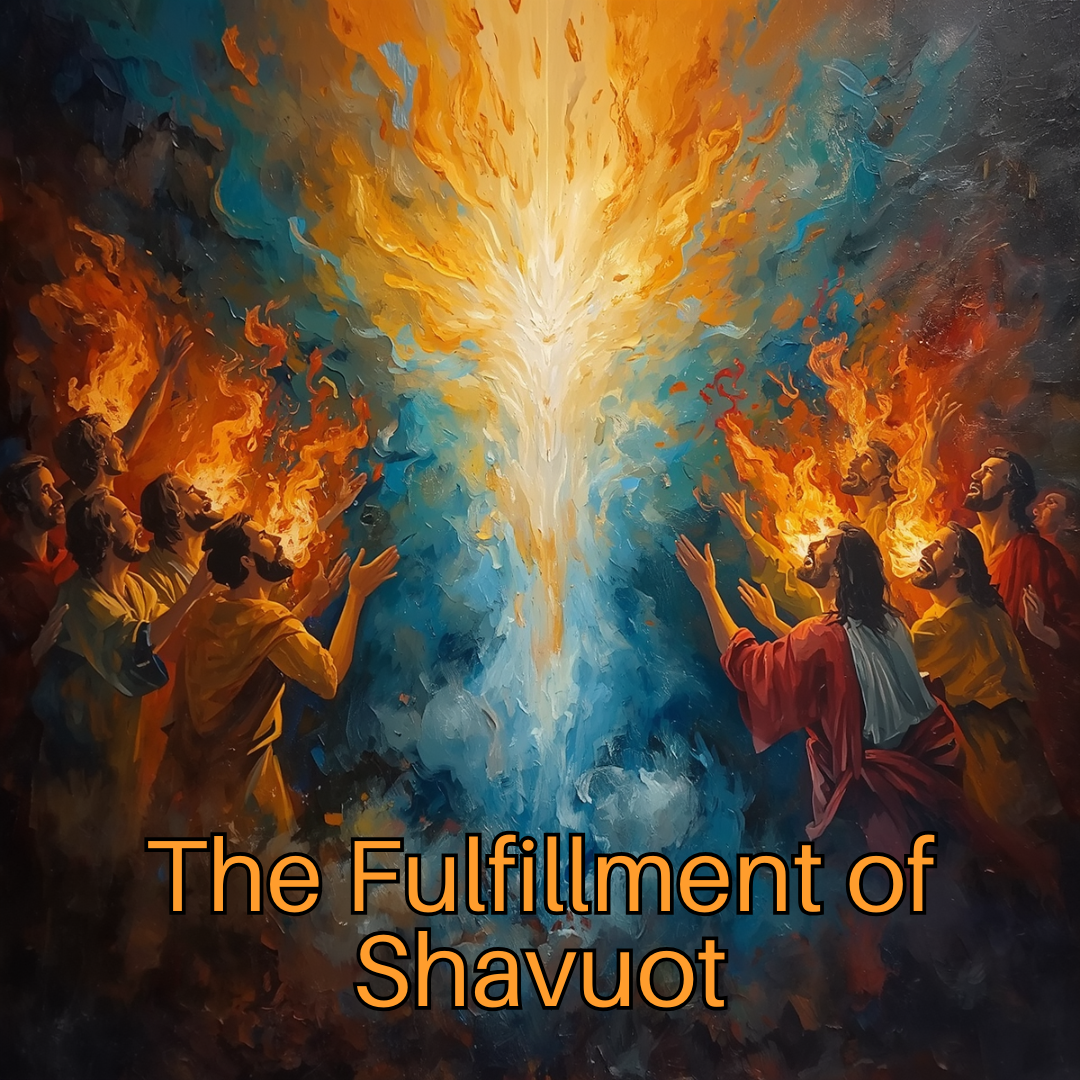
Shavuot, or the Feast of Weeks, is one of three pilgrimage feasts that every able-bodied Israelite male had to travel to Jerusalem to take part in. The author of the book of Hebrews wrote that the Law was just a shadow of the good things to come, which would include the feasts. Shavuot, the Feast of Weeks, was fulfilled 2000 years ago. How? Join Reverend Kenny Yates as he reminds us of the promises of the Law in his Shavuot Message, The Fulfillment of Shavuot.

Deuteronomy 16:16-17 (NKJV)
Hebrews 10:1-7 (NIV)
Psalms 40:6-8
Titus 1:13-16 (NKJV)
Luke 24:49 (NKJV)
Acts 2:1-4 (NKJV)
2 Corinthians 3:6 (NKJV)
1 Corinthians 15:56 (NKJV)
Exodus 32:28 (NIV)
Acts 2:41
Romans 8:1-2 (NIV)
Mark 16:17-18
Romans 8:11a
John 14:12-14
Like and Share This:

The Feast of Booths

Once a year, all of Israel would leave their homes and dwell in tents. For seven days, the people of Israel would dwell in tents and remember that their ancestors dwelt in tents in the wilderness before they could enter the promised land. If this is a Jewish Feast, what does it have to do with us today? All of these feasts will one day be fulfilled, and that directly affects all of humanity. Therefore, if this feast has yet to be fulfilled, then we, especially Christians, are looking forward to the fulfillment, as these are just a shadow of the good things to come. Join Reverend Kenny Yates as he sheds some light on the final feast of the seven God-sanctioned feasts in his message, The Feast of Booths.

Like and Share This:

The Final Atonement

The LORD Himself has ordained 7 feasts. Yom Kippur (The Day of Atonement) is one of, if not the holiest, of the seven feasts of the LORD. As Christians, we don’t keep the feasts as we are no longer under the Law of Moses, but now under the Law of Christ. So, why should we care? And if we aren’t keeping the feasts, why do we remember it and talk about it? Join Reverend Kenny Yates as he opens our eyes to the importance of this holy Jewish Feast in his message, The Final Atonement.

Like and Share This:

At The Last Trump

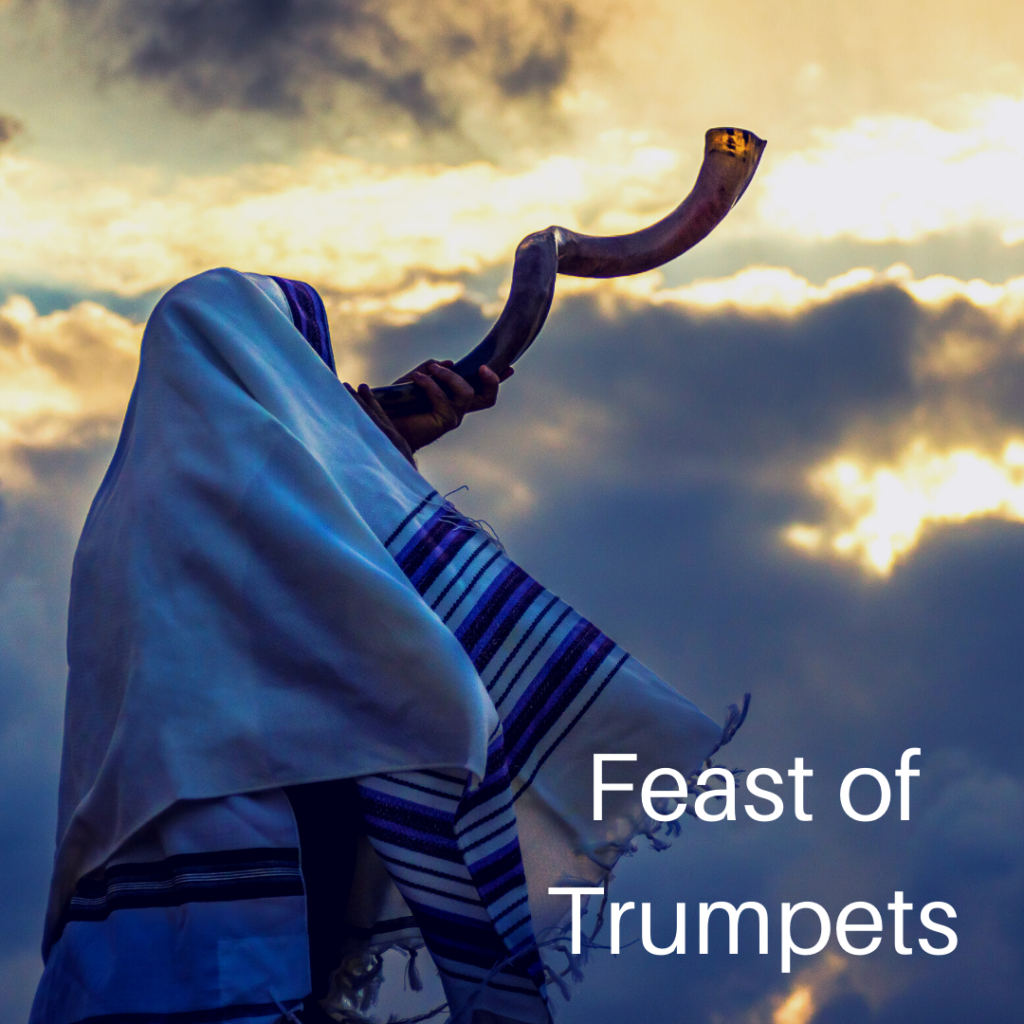
There are seven feasts sanctioned by the LORD God in the Law of Moses. Each feast foreshadows an event. Passover, Unleavened Bread, First Fruits, and Weeks have all been fulfilled. Four have been fulfilled, three are left. This Monday evening is the beginning of the Feast of Trumpets. A heavily debated feast in the Church today. Join Reverend Kenny Yates as he opens our eyes to mysteries of the feasts in his message, At The Last Trump.

Like and Share This:

The Great Day of The Feast

There are seven God-ordained feasts; three of those seven are pilgrimage feasts. The final feast of the year is the Feast of Booths (Tabernacles or Ingathering), which is also one of the three pilgrimage feasts. If each of these feasts foreshadows something good to come, what does the Feast of Booths (Tabernacles or Ingathering) foreshadow, and why is it important to us today? Join Reverend Kenny Yates as he shows the great importance of the Feast of Booths (Tabernacles) in his message, The Great Day of The Feast.

John 7:37-39
John 7:3-9
John 7:15
Malachi 3:6
Psalms 2:12
John 7:37b-38
Acts 4:12
Colossians 2:17
Hebrews 10
Leviticus 23:33-36
Revelation 15:1
Zechariah 14:16-19
Zechariah 14:4
Revelation 20:1-6
Revelation 21:3-4
Zechariah 14:8
Revelation 21:6b

Like and Share This:

What Is The Passover?

The Feast of Passover is the precursor or forerunner of Easter. It was the very first instituted by God while His people were still in slavery in the land of Egypt. Though we’ve all heard about it, this specific feast is often very foreign to the Church. We don’t fully understand what Passover is, why it took place, or what each instruction of the Passover meant. Join Reverend Kenny Yates as he explains the first feast in his video, What Is The Passover?

Exodus 12
Exodus 7-10
2 Chronicles 8:13
Exodus 4:22-23
Exodus 11:4-5
Exodus 12:12-18:13
Deuteronomy 16
Leviticus 14:4-6
Leviticus 14:49- 52 
Numbers 31:23
Ezekiel 24:3-5
Ezekiel 11:2-3

What Is The Passover?

The Feast of Passover

1 The Lord said to Moses and Aaron in the land of Egypt, “This month shall be for you the beginning of months. It shall be the first month of the year for you. Tell all the congregation of Israel that on the tenth day of this month every man shall take a lamb according to their fathers’ houses, a lamb for a household. And if the household is too small for a lamb, then he and his nearest neighbor shall take according to the number of persons; according to what each can eat you shall make your count for the lamb. Your lamb shall be without blemish, a male a year old. You may take it from the sheep or from the goats, and you shall keep it until the fourteenth day of this month, when the whole assembly of the congregation of Israel shall kill their lambs at twilight.
Then they shall take some of the blood and put it on the two doorposts and the lintel of the houses in which they eat it. They shall eat the flesh that night, roasted on the fire; with unleavened bread and bitter herbs they shall eat it. Do not eat any of it raw or boiled in water, but roasted, its head with its legs and its inner parts. 10 And you shall let none of it remain until the morning; anything that remains until the morning you shall burn. 11 In this manner you shall eat it: with your belt fastened, your sandals on your feet, and your staff in your hand. And you shall eat it in haste. It is the Lord’s Passover. 12 For I will pass through the land of Egypt that night, and I will strike all the firstborn in the land of Egypt, both man and beast; and on all the gods of Egypt I will execute judgments: I am the Lord. 13 The blood shall be a sign for you, on the houses where you are. And when I see the blood, I will pass over you, and no plague will befall you to destroy you, when I strike the land of Egypt.”

Exodus 12:1-13

Back to Nuggets of Truth?

Back to Theology?

Similar Content

Like and Share This:

Yom Kippur Pt. 2: The Fulfillment of the Day of Atonement

Once a year, the High Priest was to sacrifice two goats for the sins of Israel. Jesus is our perfect sacrificial lamb, so why did the high priests have to sacrifice two goats? And why did one of the two goats have to go to Azazel? Join Reverend Kenny Yates as he opens our eyes to a mystery of the Day of Atonement in his message, Yom Kippur Pt. 2: The Fulfillment of the Day of Atonement.

Psalms 141:2
Luke 1:10
Revelation 5:8; 8:3
Leviticus 16:20-28
Leviticus 1:4
Leviticus 3:2
Matthew 5:17-18
Matthew 3:15
Isaiah 53:6
2 Corinthians 5:21
Romans 6:23
Revelation 20:14-15
Leviticus 16:21
Revelation 20:6
Hebrews 8:1-2, 13
Psalms 139:8
Revelation 20:12-15
Psalms 40:6
Psalms 51:16

Yom Kippur

The Fulfillment of the Day of Atonement

1 The Lord spoke to Moses after the death of the two sons of Aaron, when they drew near before the Lord and died, and the Lord said to Moses, “Tell Aaron your brother not to come at any time into the Holy Place inside the veil, before the mercy seat that is on the ark, so that he may not die. For I will appear in the cloud over the mercy seat. But in this way Aaron shall come into the Holy Place: with a bull from the herd for a sin offering and a ram for a burnt offering. He shall put on the holy linen coat and shall have the linen undergarment on his body, and he shall tie the linen sash around his waist, and wear the linen turban; these are the holy garments. He shall bathe his body in water and then put them on. And he shall take from the congregation of the people of Israel two male goats for a sin offering, and one ram for a burnt offering. Aaron shall offer the bull as a sin offering for himself and shall make atonement for himself and for his house. Then he shall take the two goats and set them before the Lord at the entrance of the tent of meeting. And Aaron shall cast lots over the two goats, one lot for the Lord and the other lot for Azazel. And Aaron shall present the goat on which the lot fell for the Lord and use it as a sin offering, 10 but the goat on which the lot fell for Azazel shall be presented alive before the Lord to make atonement over it, that it may be sent away into the wilderness to Azazel.

Leviticus 16:1-10

Jesus was the fulfillment of the Day of Atonement.

Part One?

Back to Special Occasion Messages?

More Messages?

Similar Content

Back to Special Occasion Messages?

More Messages?

Similar Content

Like and Share This:

Yom Kippur Pt. 1: The Institution of the Day of Atonement

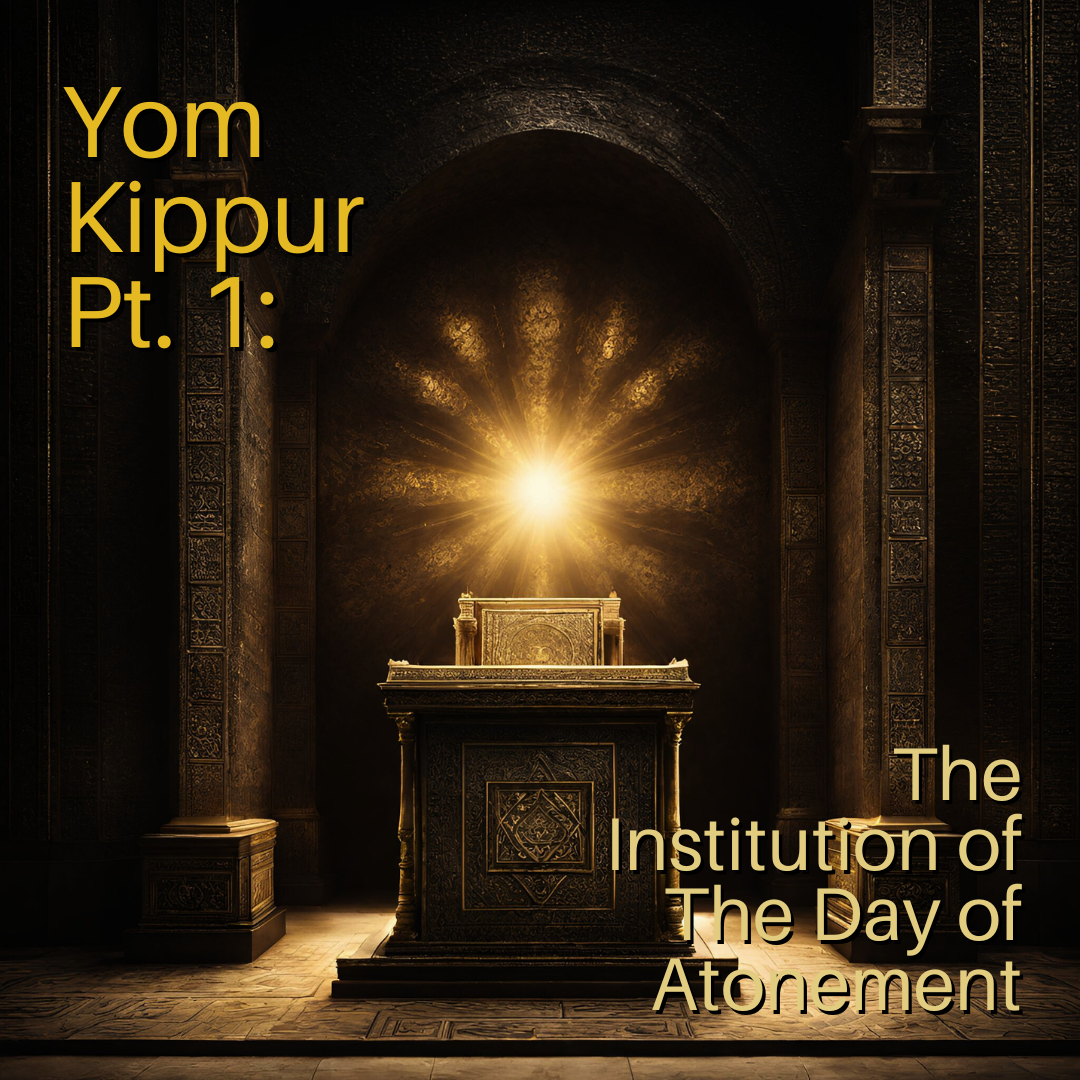
There are seven feasts of God given to the children of Jacob through the prophet Moses. Four of these seven feasts of God have been fulfilled. The last three, The Feast of Trumpets, The Day of Atonement, and The Feast of Tabernacles, have yet to be fulfilled. If we understand the institution and purpose of these feasts, then we can better understand what they foreshadow. Join Reverend Kenny Yates as he opens our eyes to the mysteries of Yom Kippur in his message, Yom Kippur Pt. 1: The Institution of the Day of Atonement.

Leviticus 23:26-32
Leviticus 16:1-34
Zechariah 3:8-9
Hebrews 9:1-5
Exodus 26:31-34
Exodus 30:6-7

Yom Kippur

The Institution of the Day of Atonement

26 And the Lord spoke to Moses, saying, 27 “Now on the tenth day of this seventh month is the Day of Atonement. It shall be for you a time of holy convocation, and you shall afflict yourselves and present a food offering to the Lord. 28 And you shall not do any work on that very day, for it is a Day of Atonement, to make atonement for you before the Lord your God. 29 For whoever is not afflicted on that very day shall be cut off from his people. 30 And whoever does any work on that very day, that person I will destroy from among his people. 31 You shall not do any work. It is a statute forever throughout your generations in all your dwelling places. 32 It shall be to you a Sabbath of solemn rest, and you shall afflict yourselves. On the ninth day of the month beginning at evening, from evening to evening shall you keep your Sabbath.”

Leviticus 23:26-32

The institution of the Day of Atonement came through the Prophet Moses in the wilderness.

Part Two?

Back to Special Occasion Messages?

More Messages?

Similar Content

Like and Share This:

The Eternal Promises of God

Eternity is no longer just a far-off idea that won’t come to pass for a very long time. Eternity is knocking at our door. It’s right around the corner. Our eternity is being decided right now by us. Every action we make and every word we speak dictates our eternal dwelling place. Jesus warned us that there are only two options for our eternal dwelling place: eternal life and eternal death. Jesus also promised us that where we spend eternity will be up to us. Join Reverend Kenny Yates as he opens our eyes to the importance of our choices in this life as it directly dictates the next life in his message, The Eternal Promises of God.

John 3:14-21
Revelation 12:12
Revelation 12:11
1 John 4:19
Romans 5:6–10
Psalms 1:4
Ezekiel 33:4-5
Acts 18:5-6
Psalms 9:6-7
Matthew 8:12
Matthew 13:40-43
Mark 9:43-48

The Eternal Promises of God

God’s Eternal Promises

The Feast of Tabernacles or Booths (Sukkot)

33 And the Lord spoke to Moses, saying, 34 “Speak to the people of Israel, saying, On the fifteenth day of this seventh month and for seven days is the Feast of Booths to the Lord. 35 On the first day shall be a holy convocation; you shall not do any ordinary work. 36 For seven days you shall present food offerings to the Lord. On the eighth day you shall hold a holy convocation and present a food offering to the Lord. It is a solemn assembly; you shall not do any ordinary work.”

Leviticus 23:33-36

Eternal Dwelling Places

31 When the Son of Man comes in His glory, and all the angels with Him, then He will sit on His glorious throne. 32 Before Him will be gathered all the nations, and He will separate people one from another as a shepherd separates the sheep from the goats. 33 And He will place the sheep on His right, but the goats on the left.

34 Then the King will say to those on His right, ‘Come, you who are blessed by my Father, inherit the kingdom prepared for you from the foundation of the world. 35 For I was hungry and you gave me food, I was thirsty and you gave me drink, I was a stranger and you welcomed me, 36 I was naked and you clothed me, I was sick and you visited me, I was in prison and you came to me.’ 37 Then the righteous will answer Him, saying, ‘Lord, when did we see you hungry and feed you, or thirsty and give you drink? 38 And when did we see you a stranger and welcome you, or naked and clothe you? 39 And when did we see you sick or in prison and visit you?’ 40 And the King will answer them, ‘Truly, I say to you, as you did it to one of the least of these my brothers, you did it to me.’

41 Then He will say to those on His left, ‘Depart from me, you cursed, into the eternal fire prepared for the devil and his angels. 42 For I was hungry and you gave me no food, I was thirsty and you gave me no drink, 43 I was a stranger and you did not welcome me, naked and you did not clothe me, sick and in prison and you did not visit me.’ 44 Then they also will answer, saying, ‘Lord, when did we see you hungry or thirsty or a stranger or naked or sick or in prison, and did not minister to you?’ 45 Then He will answer them, saying, ‘Truly, I say to you, as you did not do it to one of the least of these, you did not do it to me.’ 46 And these will go away into eternal punishment, but the righteous into eternal life.

Matthew 25:31-46

Back to Special Occasion Messages?

More Messages?

Similar Content

Like and Share This: