A Man of Sorrows

Isaiah 53:3-12

[3]  He was despised and rejected by men, a man of sorrows and acquainted with grief; and as one from whom men hide their faces he was despised, and we esteemed him not. [4]  Surely he has borne our griefs and carried our sorrows; yet we esteemed him stricken, smitten by God, and afflicted. [5]  But he was pierced for our transgressions; he was crushed for our iniquities; upon him was the chastisement that brought us peace, and with his wounds we are healed. [6]  All we like sheep have gone astray; we have turned—every one—to his own way; and the Lord has laid on him the iniquity of us all. [7] He was oppressed, and he was afflicted, yet he opened not his mouth; like a lamb that is led to the slaughter, and like a sheep that before its shearers is silent, so he opened not his mouth. [8] By oppression and judgment he was taken away; and as for his generation, who considered that he was cut off out of the land of the living, stricken for the transgression of my people? [9] And they made his grave with the wicked and with a rich man in his death, although he had done no violence, and there was no deceit in his mouth. [10] Yet it was the will of the Lord to crush him; he has put him to grief; when his soul makes an offering for guilt, he shall see his offspring; he shall prolong his days; the will of the Lord shall prosper in his hand. [11] Out of the anguish of his soul he shall see and be satisfied; by his knowledge shall the righteous one, my servant, make many to be accounted righteous, and he shall bear their iniquities. [12]  Therefore I will divide him a portion with the many, and he shall divide the spoil with the strong, because he poured out his soul to death and was numbered with the transgressors; yet he bore the sin of many, and makes intercession for the transgressors.

Jesus has now been betrayed, condemned by the chief priests, turned over to Pilate, flogged mercilessly, and forced to carry His own cross up to Golgotha. On His way the cross becomes too much for Him and He is physically unable to carry it any further, so they get Simon the Cyrene to carry Jesus’ cross for Him. As if that wasn’t enough, they then strip Him of His clothes and nail Him to a tree.

Everyone around Him is mocking Him and reviling Him. Even those on the cross next to Him are mocking Him. People passing by are ridiculing and spewing hatred His way. It’s not until after Jesus drinks the sour wine and is almost ready to die that one thief on the cross realizes He is in fact the Messiah and changes His attitude before Him.

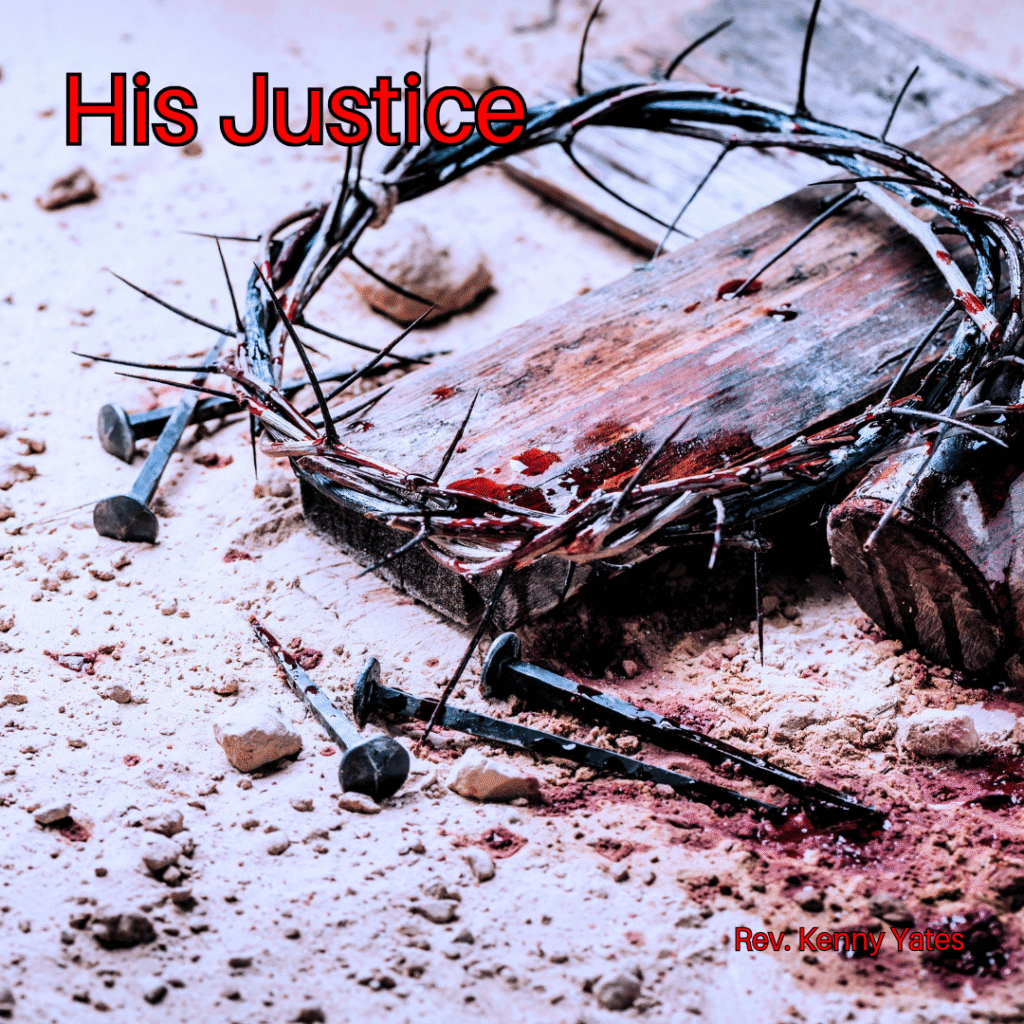
His body is raw from being flogged. His strength is gone from within Him and He is slowly and painfully suffocating to death. In order to get any ounce of breath into His lungs He has to push against the nails in His feet and His raw back against a wooden cross. He did this fully knowing that those around Him, the majority, would never repent. They’d never accept His sacrifice, but it didn’t matter. He did it willingly out of love, even go as far as to pray on their behalf for the Father to forgive them. From 9 am to 3 pm He hung on that cross in agony, never once taking the easy way out and giving into pride and showing them who He is by coming down off of that cross. Still, He turned the other cheek and showed them and the world love.

It’s easy to overlook what Christ did for us. It’s easy to just take it for granted. This is the importance of truly understanding what Christ did for us. I’ve watched the Passion of  the Christ ever since it first came out. I flinch at each whip that hits His body so viciously and every nail that pierces His flesh so mercilessly. I have loved ones who refuse to watch it because it’s too gruesome. I used to believe that this portrayal was what Christ would’ve looked like on the cross, but after reading Isaiah, I realized it wasn’t gruesome and painful enough.

14 Just as there were many who were appalled at Him— His appearance was so disfigured beyond that of any human being and His form marred beyond human likeness—

Isaiah 52:14NIV

Isaiah says He was beaten beyond recognition so much so you couldn’t even tell He was human. Let that sink in. While Mel Gibson’s depiction was gruesome and is by far the best depiction we have of Christ’s crucifixion today, it doesn’t even come close to what Christ actually went through on the cross.

Christ’s sacrifice was so much more than what we feel and think it was. How can we refuse to look at something that doesn’t even come close to the true sacrifice of Christ Jesus because it’s too gruesome, but we want to accept the benefits of that sacrifice?

When we water down the message of salvation and all that Christ did for us, we begin to be take the sacrifice for granted. His sacrifice wasn’t nothing. It was a great sacrifice. At burden so henry Isaiah rightfully calls Him a Man of Sorrows.

Dear LORD, I’m sorry for every time I have taken Your sacrifice for granted. Please forgive me, LORD. Thank You for Your sacrifice. Thank You for Your love. Thank You for Your grace. Thank You, LORD, for giving Yourself without reservation. Help me to proclaim Your death until You return or call me to You. Help me to live a life worthy of being called Your servant. In Jesus’ name, I pray, amen. 

Like and Share This:

A Weary Spirit

It was now late at night. Jesus had just eaten. He had washed the disciples’ feet. He had instituted the LORD’s supper. They had sang a hymn on the way to the Mount of Olives, and now He was on the Mount of Olives. I never really thought about it before, but the LORD didn’t sleep His last night before this death in less than 24 hours.

Think about it. If it was your last night, what are you doing? Many would say all the things they hadn’t done that they could do in that last night.” Others say they would make sure their family knew they loved them.

Think about it for a second. Jesus did none of that. Jesus spent His last night before His death with His disciples preparing them for what for what was to come and in prayer to His heavenly Father. He didn’t go see His mother. He didn’t go see His siblings. He prepared His disciples and prepared Himself for what was to come.

How many of us would spend the last night of our lives on earth forsaking our freshly desires? I’m sure Jesus would’ve loved to be with His mother reassuring her it was all going to be okay. I’m sure He was exhausted and could do with a good nap.

Think about it. He was stressed and just spent the previous night and day preparing His disciples for the future. All of that would stress anyone out. It would cause anyone’s body to be exhausted, yet He didn’t sleep. He spent the night preparing. Jesus forsook the needs and desires of the flesh to tend to the desires and needs of the Spirit. Jesus understood His call. He understood His call.

A weary body can be dealt with, but a weary spirit, that’s something else.

Batman

Dear LORD, I’m sorry for all of the times I’ve put the desires of my flesh above the needs of my spirit. Thank You for never leaving me nor forsaking me. Please help me to love You with all my heart, soul, and mind. Help me to pick up my cross and follow You. In Jesus’ name, I pray, amen.


Like and Share This:

Are You Betraying Jesus?

22 Now the Feast of Unleavened Bread drew near, which is called the Passover. And the chief priests and the scribes were seeking how to put him to death, for they feared the people. Then Satan entered into Judas called Iscariot, who was of the number of the twelve. He went away and conferred with the chief priests and officers how he might betray him to them. And they were glad, and agreed to give him money. So he consented and sought an opportunity to betray him to them in the absence of a crowd. ~ Luke 22:1-6

It’s Wednesday, and Jerusalem’s still buzzing from Jesus’ grand entry on a donkey, hailed as king just three days ago. He’s been teaching daily, pouring out truth and love, even as the religious leaders plot against Him. But today, something darker stirs. Judas, one of Jesus’ closest followers, makes a choice that changes everything—he agrees to betray his Teacher for a handful of silver, 30 pieces. Can you imagine? Walking with Jesus, seeing His miracles, hearing His words, and still turning away. Luke says Satan entered Judas, but Judas opened the door, letting greed or disappointment take hold. Thirty pieces of silver—about four months’ worth of wages—was enough to trade the Son of God for a fleeting gain. It’s a heartbreaking moment, showing how close someone can be to Jesus and still miss His heart.

Yet, even on this day, Jesus keeps on teaching, keeps on loving, even though He knows He will be betrayed today. He knows that it is Judas who will betray Him. Around this same time, He might’ve shared the greatest commandment teaching: love God with all your heart, soul, mind, and strength, and love your neighbor as yourself (Mark 12:28-34). While Judas chose betrayal, Jesus called for devotion, showing us the way to true life.

Today, Wednesday, three days after celebrating Palm Sunday, let us look inside our own selves and ask, ‘Are we loyal to Jesus?’ Or ‘Do we let things like money, fear, selfishness, anger, or pride pull us away?’ Judas’ story isn’t just history; it’s a mirror. We all face moments where we’re tempted to trade Jesus for something less. Every time we are disobedient or break one of His commandments, we betray Him and sell Him out to the enemy, the devil. Even when we feel the urge to repent, but refuse, we betray Jesus all over again. But here’s the Good News, we have hope: Jesus knows our weaknesses, and He’s still calling us to follow Him, to choose love and loyalty before it’s too late. As the cross draws near, let’s recommit to Him, trusting He’s worth everything.

Take a few minutes today to identify at least one temptation that pulls you away from Jesus. Whether it is a habit, a worry, or a lingering desire, if it separates you from the Savior, repent of it and leave it behind. And pray for loyalty, so that you will not fall into temptation, as Jesus told His three disciples.

Dear Heavenly Father, thank You for Your steadfast love. Thank You that one day, because of Your great love for the world, You sent Your only begotten Son into the world, to die for us. Search my heart and see if there be any wicked way in me. Bring conviction on those things that I need to repent of and give me the strength to forsake them so that I might not betray the Savior with a kiss. In Jesus’ name, I pray, amen.

Like and Share This:

Let Jesus Be LORD

27 And they came again to Jerusalem. And as He was walking in the temple, the chief priests and the scribes and the elders came to Him, 28 and they said to Him, “By what authority are You doing these things, or who gave You this authority to do them?” 29 Jesus said to them, “I will ask you one question; answer Me, and I will tell you by what authority I do these things. 30 Was the baptism of John from heaven or from man? Answer Me.31 And they discussed it with one another, saying, “If we say, ‘From heaven,’ He will say, ‘Why then did you not believe him?’ 32 But shall we say, ‘From man’?”—they were afraid of the people, for they all held that John really was a prophet. 33 So they answered Jesus, “We do not know.” And Jesus said to them, “Neither will I tell you by what authority I do these things.” ~ Mark 11:27-33

The next morning, Tuesday, they arrived again in Jerusalem, and while Jesus was walking in the temple courts, the chief priests, the teachers of the law, and the elders came to Him, and it was like they attacked Him, ‘By what authority are You doing these things?’ ‘And who gave You authority to do this?’ But Jesus was and is way smarter than they were and would not allow Himself to be trapped by their questions. So, instead of giving them a right-out answer, He, instead, asked them a question in order to receive an answer. He asked about John’s baptism—was it from heaven, or of human origin? But they were on their toes. They knew Jesus was clever and was always trying to lead them to admit and receive the truth. So, after discussing it among themselves, they simply answered, ‘We don’t know.’ So Jesus wouldn’t answer their question either.

See, Jesus didn’t just toss out a random question when He asked about John’s baptism—He was shining a light on the hearts of those chief priests, scribes, and elders. He knew their question about His authority wasn’t sincere; they wanted to trap Him, not learn from Him. By asking, “Was John’s baptism from heaven or from men?” Jesus cleverly turned the tables. John had pointed straight to Jesus and proclaimed Him the Messiah, so if they admitted John’s work was from God, they’d have to face their own rejection of Jesus. It was like Jesus was saying, “You already know the answer, but will you admit it?” His question wasn’t just a debate tactic—it was an invitation to truth, a chance for them to see that He was sent by God. But their hearts were too hard, too tangled up in pride and power to take that step. Jesus’ wisdom left them speechless, showing us He’s not just smart—He’s the Truth itself, calling us to trust Him fully.

Those religious leaders squirmed under the pressure and finally muttered, “We don’t know,” because they were caught between a rock and a hard place. Say John’s baptism was from heaven, and they’d have to explain why they ignored him and, by extension, Jesus. Say it was just human, and they’d lose the crowd, who loved John as a prophet. So they dodged the question, too scared of the people and too stubborn to face the truth about Jesus. Their answer wasn’t just a cop-out; it showed they cared more about looking good than knowing God. It’s a warning for us—when we dodge Jesus’ call or question His place in our lives, we’re not fooling Him. He sees our hearts, just like He saw theirs. That’s why this moment matters—it’s Jesus asking us, too, to stop hiding and let Him be LORD, no matter what it costs.

Heavenly Father, lead me in the truth of Your Son, Jesus Christ. Help me to submit totally to Him and let Him be LORD of my life. In Jesus’ name, I pray, amen.

Like and Share This:

Let’s Cleanse Our Temples

And Jesus entered the temple and drove out all who sold and bought in the temple, and He overturned the tables of the money-changers and the seats of those who sold pigeons. He said to them, ‘It is written, “My house shall be called a house of prayer,” but you make it a den of robbers.~ Matthew 21:1213

Matthew recalls Jesus riding triumphantly into Jerusalem and heading straight to the Temple. Mark places this event on the next day, Monday. Either way, Jesus had just entered Jerusalem on a donkey, accompanied by a very large crowd. Only two or three days earlier, He had raised Lazarus to life after four days in the tomb. Now, whether Sunday or Monday, Jesus strode into the Temple, angry at the chaos unfolding there. He overturned the money-changers’ tables, drove out the animals, and shouted, “It is written, ‘My house shall be called a house of prayer,’ but you make it a den of robbers!”

Why the focus on pigeons? Because the poor offered pigeons. If they couldn’t afford a lamb or goat for a sin offering, God allowed a pigeon or turtledove (Leviticus 5:7). It seems the money-changers, backed by the religious leaders who profited from this trade, were cheating the poor. The rich had servants to bring their lambs, bulls, or goats, but the poor rarely had advocates. They were taken advantage of, cheated, oppressed, and often overlooked, while the rich were exalted and frequently did the exploiting.

Jesus was outraged by this injustice. His heart burned for righteousness, justice, and fairness (Proverbs 1:3). It angered Him that the religious leaders, entrusted with God’s Temple, allowed such corruption in the House of Prayer. He hasn’t changed, nor have His apostles. In his letter, James, the brother of the LORD, speaks boldly about the rich, even accusing them of dishonoring and oppressing the poor (James 2:6-7). Wealth isn’t wrong—many rich people are godly—but it’s a problem when the poor are trampled in the process. So, Jesus overturned the tables, scattered the money, and drove out the animals to cleanse the Temple.

What about you? What mess lingers in your temple? Paul reminds us,

Do you not know that your body is a temple of the Holy Spirit within you, whom you have from God? You are not your own, for you were bought with a price. So glorify God in your body.

1 Corinthians 6:19-20

Have you cleaned lately? Clutter defiles our hearts—greed and apathy cheat us of holiness. Anger and malice disrupt our worship. Distractions and busyness steal our prayer and worship time with God, turning our temples into dens of thieves. I urge you to overturn the tables of your money-changers and drive out life’s distractions. Don’t let these thieves and moneychangers defile your temple.

Heavenly Father, You are the vinedresser; please come and prune the branches that are producing fruit so that they can produce more fruit. Please cut out the branches that are not producing fruit at all so that I can produce even more fruit. Let this Easter week be a week of pruning and cleansing so that I may live a life pleasing to You, in Jesus’ name, I pray, amen.

Like and Share This:

Laying Down Your Cloak

8 Most of the crowd spread their cloaks on the road, and others cut branches from the trees and spread them on the road. 9 And the crowds that went before Him and that followed Him were shouting, “Hosanna to the Son of David! Blessed is He who comes in the Name of the LORD! Hosanna in the highest!” 10 And when He entered Jerusalem, the whole city was stirred up, saying, “Who is this?” 11 And the crowds said, “This is the prophet Jesus, from Nazareth of Galilee.” ~ Matthew 21:8-11

Picture the scene: Jerusalem is abuzz with the news. Lazarus, a man dead for four days, has been raised to life by the prophet from Nazareth of Galilee. And now He’s on His way to Jerusalem. The crowd that had gathered in Jerusalem to celebrate Passover is electric with excitement. And here He comes, Jesus riding in—not on a flashy stallion like some Roman big shot, but on a borrowed donkey, kicking up dust. The crowd rushes together and, as one man, begins to shout, “Hosanna!”—which means “Save us, please!”—now the whole company of people is joining in the chorus. The noise is so loud that it seems like it is shaking the ground, which catches the attention of the Pharisees who stand aloof, watching.

The crowd rips off their own cloaks and throws them down as others run to cut palm branches, and run back to lay the palm branches down in front of Jesus along with their cloaks, turning the road into a makeshift red carpet as He slowly makes His way up the hill toward the Temple. Those cloaks weren’t just old rags. For many, a cloak was protection from the sun, a blanket at night, a cover from the wind, or maybe it was their one decent piece of clothing. Laying it down was a sacrifice, a way of saying, “Jesus, you’re worth more than my comfort.”

Ask yourself, what’s my cloak? Is it your schedule, packed so tight there’s no room for God? Your reputation, where you’d rather look good than be real? Maybe it’s a grudge you’re wearing like a second skin. Laying it down means trusting Jesus enough to let go, but it might just cost you something. Now consider this for a moment. The crowd that day is all-in, shouting “Blessed is He who comes in the Name of the LORD!” They’re actually calling Jesus the Messiah, the King of Israel, the one they’ve been waiting for. The problem is, they wanted a king to fix their problems their way—kick out the Romans, make life easy, give us self-government. But Jesus isn’t here for their script. He’s on a donkey, not a warhorse, heading toward a cross, not an earthly throne.

How often do we cheer for Jesus when He fits our plans—a better job, healed relationship, smooth sailing—but get shaky when He leads us somewhere uncomfortable? Palm Sunday’s a gut-check: Are we welcoming the real Jesus, or just the version we’ve dressed up in our heads? And then there’s the shadow hanging over the party.

Jesus knows this crowd is fickle. Some of these same voices yelling “Hosanna” will scream “Crucify Him” in five days. He knows that all too well. But it’s not just about them—it’s us, too. We’ve all got moments where we’re loud for God at a worship night or when life’s good, but we go silent when the job’s stressful, the diagnosis hits, or following Jesus means standing out in a way that feels risky.

The cloaks on the road are a beautiful gesture, but Jesus isn’t after our stuff—He’s after our hearts. Not just for a parade, but for the long, messy road to the cross and beyond. So, what does it look like to lay down your cloak not just for a moment, but as a way of life? Maybe it’s choosing to trust Him daily, even when the path feels uncertain. Maybe it’s admitting you don’t have it all together and letting Him meet you there. Palm Sunday is a mix of joy and tension—celebration, surrender, and a hint of what’s coming. It’s Jesus saying, “I’m your King, but I’m doing this My way, for your sake.” And it’s us, invited to join the crowd—not just with our voices, but with our whole lives.

Heavenly Father. Thank You for sending Your Son, Jesus Christ, to die on the Cross for us. Thank You for Your obedience to the Father, LORD Jesus. I praise You for all You did, and all You went through for us. Help me to live for You now, and forever. In Jesus’ name, I pray, amen.

Like and Share This:

An Unleavened Feast

14This day shall be for you a memorial day, and you shall keep it as a feast to the Lord; throughout your generations, as a statute forever, you shall keep it as a feast. 15 Seven days you shall eat unleavened bread. On the first day you shall remove leaven out of your houses, for if anyone eats what is leavened, from the first day until the seventh day, that person shall be cut off from Israel. 16 On the first day you shall hold a holy assembly, and on the seventh day a holy assembly. No work shall be done on those days. But what everyone needs to eat, that alone may be prepared by you. 17 And you shall observe the Feast of Unleavened Bread, for on this very day I brought your hosts out of the land of Egypt. Therefore you shall observe this day, throughout your generations, as a statute forever. 18 In the first month, from the fourteenth day of the month at evening, you shall eat unleavened bread until the twenty-first day of the month at evening. 19 For seven days no leaven is to be found in your houses. If anyone eats what is leavened, that person will be cut off from the congregation of Israel, whether he is a sojourner or a native of the land. 20 You shall eat nothing leavened; in all your dwelling places you shall eat unleavened bread. ~ Exodus 12:14-20

After the Passover lamb was slaughtered and the people of Israel partook in the Passover, the next day they were to remove the leaven from their homes. Anyone who did not would be cut off from Israel. Why? Because the Passover lamb foreshadowed Jesus and partaking in Passover foreshadowed accepting His free gift of salvation. So, what about removing the leaven? The Israelites had been slaves in Egypt for 400 years. They had been influenced by the Egyptian culture and religion as they had no leader, judge, king, or law to guide them during these years. So, they began to take on and participate in the sins of their slave masters, the Egyptians.

The Feast of Unleavened Bread was a reminder of the LORD bringing the people out of Egypt, out of the land of slavery. God was saying, I am physically removing you from slavery, now remove the leaven from among you so that I might foreshadow that one I will remove you from spiritual slavery. Leaven is a representation of sin (1 Corinthians 5:6-7). When the Passover lamb was slaughtered and the Israelites partook in the Passover, they were spiritually partaking in the taste of the salvation that has come through Jesus Christ, our final, perfect Passover Lamb.

There is nothing in the Bible that the LORD has done or said arbitrarily. Each and every thing was done with a purpose. It was done to foreshadow the good things to come. It was done to foreshadow the terrifying things to come. Each and every moment, no matter how insignificant it may seem, was done in order to prepare us for what has come and what will come.

Dear LORD, thank You for making a way for us to come to You. Thank You for all Your many blessings upon me. Please help me to not just partake in the Passover meal, but to remove the leaven from my home as well. Help me to crucify my own flesh, so that Your will might be done in my life. Help me not to make Your sacrifice null and void because I refuse to remove the leaven. Help me to live for You, LORD Jesus. In Jesus’ name, I pray, amen.

Like and Share This:

A Passover Feast

Exodus 12:5-13NIV

[5] The animals you choose must be year-old males without defect, and you may take them from the sheep or the goats. [6] Take care of them until the fourteenth day of the month, when all the members of the community of Israel must slaughter them at twilight. [7] Then they are to take some of the blood and put it on the sides and tops of the doorframes of the houses where they eat the lambs. [8] That same night they are to eat the meat roasted over the fire, along with bitter herbs, and bread made without yeast. [9] Do not eat the meat raw or boiled in water, but roast it over a fire—with the head, legs and internal organs. [10] Do not leave any of it till morning; if some is left till morning, you must burn it. [11] This is how you are to eat it: with your cloak tucked into your belt, your sandals on your feet and your staff in your hand. Eat it in haste; it is the Lord’s Passover. [12] “On that same night I will pass through Egypt and strike down every firstborn of both people and animals, and I will bring judgment on all the gods of Egypt. I am the Lord. [13] The blood will be a sign for you on the houses where you are, and when I see the blood, I will pass over you. No destructive plague will touch you when I strike Egypt.

The Passover is the feast in remembrance of the LORD passing over all who had the blood of the sacrificed lamb on the doorposts. This was the protection given to all who listened and obeyed. A protection against what? The Destroyer coming through the land of Egypt and striking down the first born. So, the LORD, when He saw the blood, would stop the Destroyer from entering the home of any person who had the blood on their doorposts.

This feast foreshadowed the LORD God Himself coming in the form of man and dying on the cross. Three days later, He rose from the dead and ascended to the father to sprinkle His blood in the altar in Heaven. Just as the blood was brushed on the doorposts, we, as Christians are washed and covered in the blood of Christ. Why? So that when the LORD comes to bring judgment on the earth by pouring out His wrath, He will look for His blood, see it, and call us to Himself so that we might not be caught in this wrath.

Dear LORD, thank You for Your sacrifice. Thank You for Your promise of redemption. Please help me to live my life striving to be worthy of Your precious and holy blood. In Jesus’ name, I pray, amen. 

Like and Share This:

Another Moses

15 The Lord your God will raise up for you a prophet like me from among you, from your fellow Israelites. You must listen to Him. ~ Deuteronomy 18:15NIV

Before Moses died, he reassured the people that the LORD would send them another prophet like him, from among their own people. Moses had been saved from the decrees of pharaoh to be thrown in the river. That very river brought him to Pharaoh’s daughter, who would pay his own mother to nurse him until he was old enough to be given to pharaoh’s daughter. He was raised in the palace of Pharaoh free from the persecution his people felt, yet he willingly risked it all to try to help his own.

This led to him fleeing for his own life and ending up a stranger in a strange land. There, he became a shepherd, a husband, and a father. He was free, enjoying life when the LORD called him back to Egypt. So, what does Moses do? The risks it all once again and goes to help his people. Then, throughout their deliverance, and even after, they complain to him. They blame him for their hardships.

Then, when God met with them, he was the only one who went into the presence of God and therefore became the bridge between God and man. Jesus’ story is similar but more intense.

He wasn’t just a guest in a foreign king’s home. No. He was the King of kings and LORD of lords seated on His own throne in Heaven. Free from all pain, suffering, and want, only to freely give it up to take on the from of a servant. He felt hunger, thirst, pain, suffering, and even temptation. All of this for the world He knew would ultimately reject Him and even crucify Him.

What’s the major difference between them? Moses physically delivered his people, but Christ physically, spiritually, and emotionally delivered all people willing to believe in Him. This deliverance was not for just a moment but is for all eternity. As Moses died, Christ also died, but the biggest difference is that Christ rose three days later. This is the most important difference.

Christ died but rose again to never die again. This is our hope. To die to sin and live to Christ. To look forward to His physical return, but even as He is physically in Heaven, His Holy Spirit dwells in us, and He lives through us. So we are not alone.

Dear LORD, thank You for Your promises fulfilled. Thank You for Your great sacrifice that freed me from my sin. Help me to not make light of Your sacrifice nor take it for granted. Teach me to lean on Your Holy Spirit and hear Your guiding whisper. In Jesus’ name, I pray, amen. 

Like and Share This:

A Hardened Heart

21 The Lord said to Moses, “When you return to Egypt, see that you perform before Pharaoh all the wonders I have given you the power to do. But I will harden his heart so that he will not let the people go.” ~ Exodus 4:21NIV

I’ve heard many people say that God creates people for destruction and others for reward. To prove this, many like to use Pharaoh in the Apostle Paul’s letter to the Romans, as an example. I personally believe they’re not fully understanding what Paul was saying.

I believe that God gives each person the chance to repent until judgment has come, then He turns them over to their own desires. If we look at the story of Pharaoh and the Exodus from Egypt, Pharaoh’s heart originally was not hardened by God. Pharaoh, when told what the LORD said, not only said “who is the LORD that I should obey Him?” but he made their slavery and oppression even harder.

The Bible recounts that Pharaoh hardened his own heart. It’s not until the plagues begin to play out, and they’re halfway over that we set the LORD harden the heart of Pharaoh and seal his fate.

The LORD says that He takes no pleasure in the death of the wicked (Ezekiel 18:32 & Ezekiel 33:11). Peter testifies that the LORD is patient towards us, not desiring that any should perish (2 Peter 3:19). This is the great it the LORD, true love for His creation, but He is also good and just in all His ways. Therefore, He is bound by His own nature, which is law, that He must punish the wicked.

So, when Pharaoh hardens his own heart time and time again and refuses to see the LORD’s signs, repent, and let His people go, the LORD turns him over to a hardened heart. Why? So that judgment might be brought out upon him, his people, and his gods.

This isn’t the only time we see this either. Paul prophesies a coming Great Delusion from the LORD. A turning over of all the wicked to their own wickedness that they might be judged because of their own wickedness.

So, what are we to do? We, as my aunt so eloquently said this past Sunday, must break up the fallow ground of our hearts so that His Word would fall on good soil and not on hardened soil. The LORD places before each of us life and death. So choose life. Tomorrow is promised to no man. We never know when we will take our last breath, neither do we know when we will be turned over to our own desires and harden our heart, as He did Pharaoh’s, sealing our fate

Dear LORD, please forgive me for every time I have hardened my heart against Your word. Please break up the fallow ground of my heart that I might not be against Your Word. Show me what is in me that needs to be removed. Renew in me a right spirit, oh LORD, that I might not be lost to my own desires. Help me to crucify my flesh daily so that I might be with You for all eternity. In Jesus’ name, I pray, amen. 

Like and Share This: